"The result of hard work"
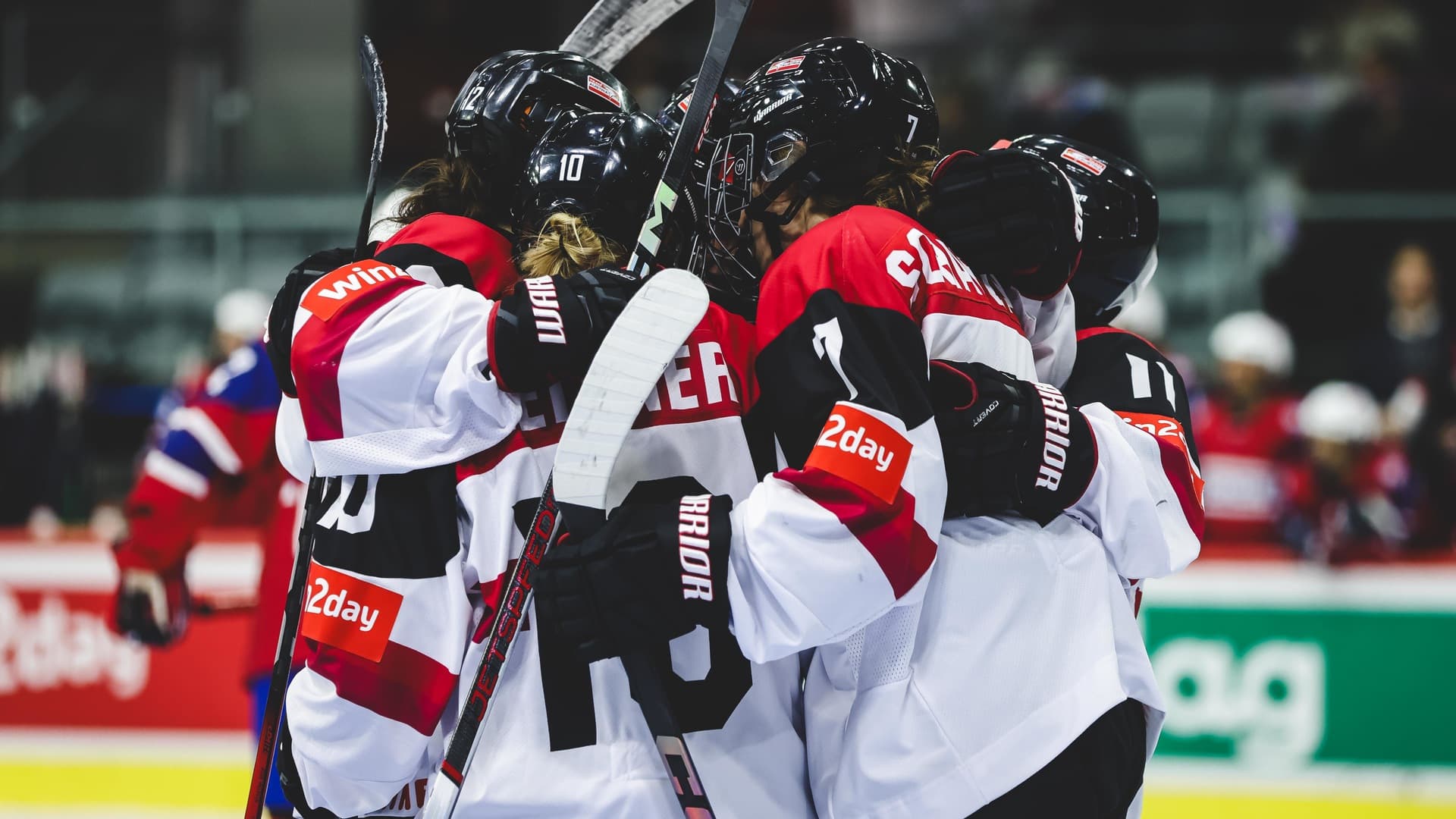
With the two internationals against Kazakhstan, the Austrian Women's National Team has taken the next step in its development. In the year of its 20th anniversary, the aim is to qualify for the Olympic Winter Games for the first time.
3 min readSource: Eishockey.at

Two wins against Kazakhstan, two further live broadcasts of these internationals with respectable viewing figures and positive development within the Austrian Women's National Team have enabled head coach Jari Risku to draw a positive conclusion after his second camp of the season.
"We focused more on our defensive play during this camp. All the players were fully committed and absorbed the new information very well," says the Finn. "In both games, our performance was best in the final period. All four lines played solidly, acting directly in both defence and offence. The team can be proud of these two games."
Also Martin Kogler, General Manager of women's ice hockey, views the national team's recent gatherings positively and also gives an outlook on the upcoming tasks this year in the interview.
Training camps in times of coronavirus are an organisational challenge. How did you approach this matter?
Kogler: We are, of course, aware that we bear a great deal of responsibility. But if we want to have a chance at the next major events – Olympic Winter Games qualification in November and the IIHF World Championship Division IA 2022 – then we need these training camps. The challenge is therefore to find a way of staging the necessary events with the best possible protection. Leopold Durchner, the ÖEHV's Covid-19 officer, once again prepared a fully updated version of our prevention concept for both camps in February – many thanks for that. All players and the entire staff arrived with a negative PCR test, while antigen tests were carried out daily on site. The opponents had also undergone a test before arriving and were tested on site. Before the games, referees, scorekeepers, timekeepers, etc. also took an antigen test. It is certainly a lot of work, but the players' health is simply the most important thing. We also owe it to the clubs to be able to send their key players back healthy, particularly ahead of the decisive phase of the championship.
Four internationals have taken place so far this season. All were broadcast live by ORF or LAOLA1. How important is TV presence for women's sport?
Kogler: TV presence is enormously important to us because women's ice hockey is still a relatively young sport – Olympic since Nagano 1998. In Austria, the Women's National Ice Hockey Team will only celebrate its 20th birthday on 31 March. And many Austrians know very little about women's ice hockey. Especially during such a development phase, these broadcasts are an extremely important factor, and we are pleased to have found such good partners for them. The fact that more and more people are keeping their fingers crossed for our girls in front of the television or stream from one broadcast to the next shows that we are on the right track.
Due to the cancellation of the World Championship, Olympic qualification is the major objective in 2021. What steps still need to be taken by November in order to be successful?
Kogler: Success is never a coincidence, but always the result of hard work. We know that, and there is naturally still a lot to do by November: if we want to successfully come through Olympic qualification or the World Championship 2022, we need a core squad of around 30 players who can all perform at a suitably high level. There is room for improvement both on ice and off ice, but we have a strong coaching team around Jari Risku to help us make the step up to the next level. Jari has already won an Olympic medal and knows what it takes. In terms of games, we have so far played opponents of equal strength – Slovakia are exactly one place behind us in the IIHF World Ranking, while Kazakhstan, following the naturalisation of seven North Americans, are also at the same level, and both already have top-division experience. In April, we also want to test ourselves against stronger nations that are ahead of us in the world rankings. An off-ice camp in Maria Alm is scheduled for early June. With camps in August and October, as well as direct preparation in November, three further camps remain before the final Olympic qualification tournament in Germany.