Sports stars for a future
This new coronavirus alliance is receiving prominent support from within its own ranks. Athletes are backing the central concern of a gradual resumption of training alongside the reopening of schools, reinforcing the arguments for it.
7 min readSource: Eishockey.at

Since the spring, the eleven team sports federations (American football, baseball, basketball, ice hockey, fistball, football, handball, hockey, rugby, volleyball and water polo – in alphabetical order) have been in close contact and have already successfully developed a range of hygiene and prevention measures for sport. With the extension of the lockdown, they are working intensively on a Return to Sport strategy. This coronavirus alliance is also receiving prominent support from within its own ranks. Athletes are backing the central concern of their federations, a gradual resumption of training alongside the reopening of schools, and reinforcing their arguments.
Sport is healthy. This argument cannot be dismissed, and at times like these it should be given considerably more importance. Countless children, young people and adults are excluded from organised sport because of the lockdown. Alongside physical activity itself, they are also cut off from their social environment.
The extension of the lockdown brought the sad certainty that this situation will not change for the foreseeable future. Membership numbers at sports federations are dwindling, while entire generations of young athletes are at risk of being lost. From the outset, sport has ensured through strict hygiene and prevention concepts that there have been no clusters in sport. Neither at professional, amateur nor youth level. The federations' figureheads share these concerns, backing the cause and reinforcing it in their own words.
Julian Baumgartlinger, captain of the ÖFB national team: "We elite athletes have the privilege of being able to pursue our profession even in these difficult times while complying with strict requirements. But ultimately, we all come from the grassroots, and we have not forgotten that. Grassroots sport is a central social and health factor for hundreds of thousands of people in Austria, especially children and young people, and also fulfils important integrative functions. Physical and mental health are our most valuable assets. It is therefore very important that these grassroots athletes, as well as the thousands of volunteers, are given a sustainable perspective on how things can continue. Physical activity in the fresh air is essential for the development of children and young people in particular."
Clemens Doppler, beach volleyball world championship runner-up and multiple European champion: "The pandemic affects us all. We must take it seriously. Protecting our fellow citizens and health are the highest priority. But I also notice with my daughter that children lack the influence of physical activity in their daily lives. You can see the absence of sport in their concentration, balance and even their sleep. I am in favour of sport gradually reopening. I think testing is the only way it could work – similar to testing in schools. If schools are reopened, sport at clubs should also gradually be permitted again as soon as possible. There is a very great risk that children will not remain in sport. A route back to sport is as hard as the road back after a serious injury. In team sports in particular, the social interaction that is now completely absent is important. It is all the more serious that there is no school provision. An entire generation is being put to the test. Home schooling places parents under an obligation and involves them much more than before the pandemic. It is therefore easy to say that the responsibility should be shifted to parents to teach their children at home and do sport with them as well. Completely foregoing sport cannot be the right way. Scientific evidence shows that a lack of physical activity has many long-term consequences, which also affect the healthcare system. I therefore ask politicians to advocate for the reopening of sport."
"I believe that the value of training together outdoors, participating in a sport and physical activity makes an essential contribution to health, due to the psychosocial development of children, physical education and as a balance for adults. Participating in sport together is important, especially for young people, in order to give them a sense of normality again," says Xaver Hasun (captain of the Austrian national hockey team and a player abroad at leading German club Harvestehuder THC; world and European indoor champion 2018), addressing the health aspect.
Detailed prevention concepts were already drawn up in spring 2020, defining group sizes in training, including distancing rules, regulating the use of changing rooms and even taking account of entering and leaving sports facilities. A particular appeal to the Federal Government is that organised sport has thus already demonstrated that the hygiene and prevention measures developed and implemented work. Marlene Hieslmair, fistball European championship runner-up, current national champion outdoors and indoors, youth coach, Union Haidlmair Schwingenschuh Nussbach: "The clubs are very well prepared for a much-needed restart with hygiene and prevention concepts. Our children and young people at the clubs have discipline and have learned in sport to follow rules. More so than in other areas of life."
Salkan Samardzic, captain of the Austrian men's national water polo team: "Regular team training, challenging one another and improving, as well as social interaction at the club, form the foundation for elite water polo. Despite prevention measures and the great commitment of club and federation officials, young water polo players are currently being denied this. Austria's top water polo players are allowed to enter the water, but the youngsters are left high and dry at home."
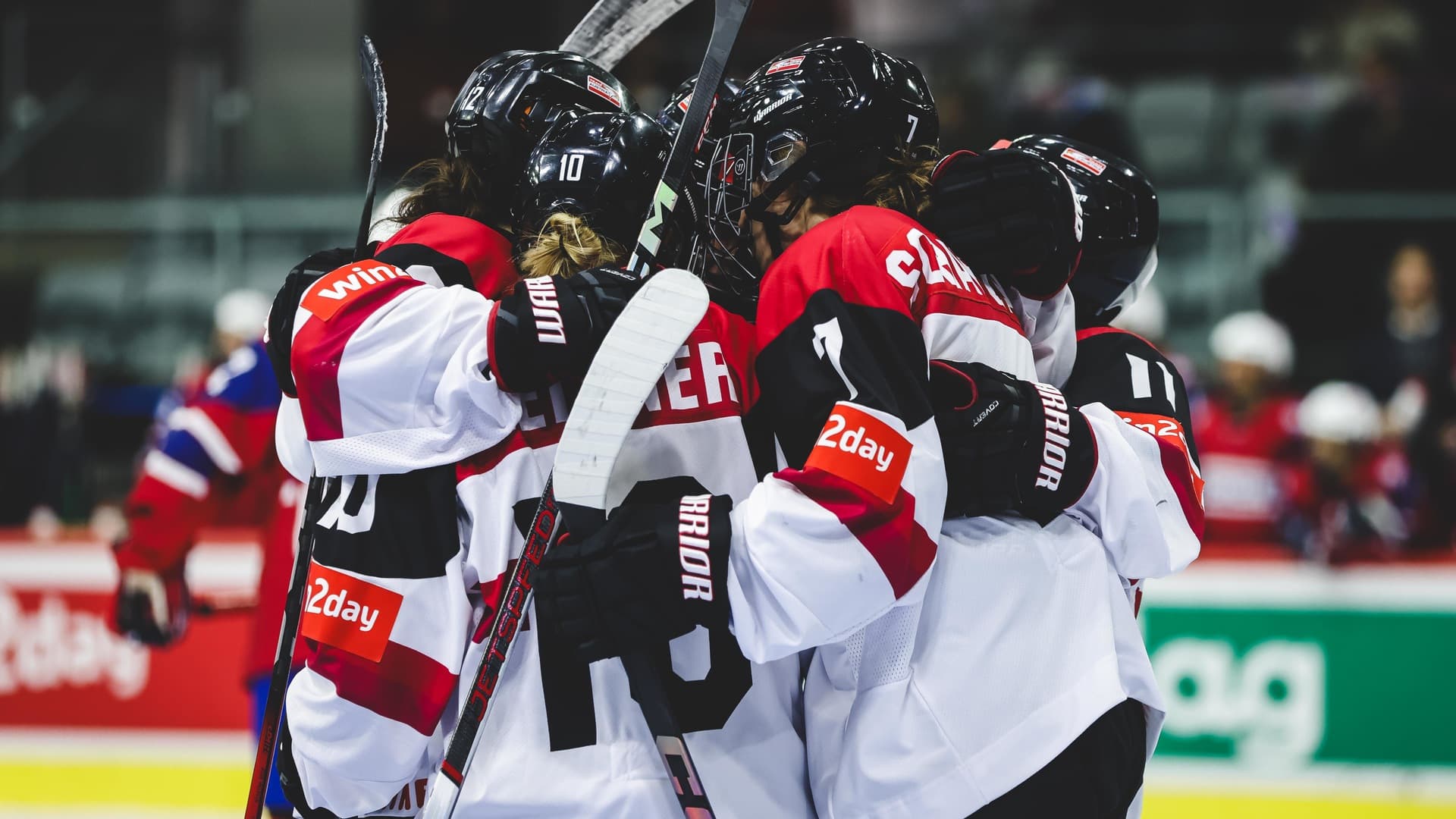
The sports stars share their greatest concern with regard to young players. Children, young people and their parents are turning away from sport. While they remained loyal to their club or sport last year, membership numbers are now declining sharply. Some federations are reporting around a third fewer members. This includes children and youth players. Thomas Raffl, captain of the Austrian national ice hockey team and EC Red Bull Salzburg: "The fact that children have been unable to train regularly for months is severely hindering their sporting development." Anna Meixner (national team captain and player with Swedish club Brynäs IF) adds: "Ice hockey is very limited by season and location. A controlled reopening of ice rinks would help our athletes from both a sporting and health perspective."
Sonja Frey, key player for the Austrian women's national handball team and Danish top club and Champions League side Team Esbjerg: "Exercise and club sport are of great importance to children and young people living in cities. I grew up in Vienna myself, and club training was an essential part of my sporting and personal development during my childhood and youth, leading to what I have been able to achieve in sport. As an elite athlete, I want to inspire as many girls as possible to take part in sport themselves. I hope that children in all countries will soon be able to practise their sport again, so that we do not lose them in the long term."
"We are currently losing many great young athletes who can no longer cope with only training online as a team. This will also harm us in international comparison in the long term. With sensible conduct and caution, it must be possible to allow team sport at grassroots and youth level again, thereby giving sport a future", Martina Lackner-Keil of Witches Linz, multiple Austrian softball state champion and national team player.
Kata Takács, captain of the women's national basketball team, echoes this sentiment: "Children's and youth sport should resume as soon as possible, as the current situation is particularly challenging and difficult for these age groups. Nowhere are social values conveyed better than in sport. Talents are being lost because they have now been unable to train for months. In order to prevent the consequences of this pandemic at a social level from becoming as devastating as those forecast for the economy, the resumption of sport is almost without alternative."
For most people, sport and their own club are far more than a hobby. They are part of their identity. Bernhard Seikovits (NFL International Player Pathway Program 2021, European Championship runner-up 2018, tight end for the national team and Dacia Vikings): "As a young athlete, I joined the Vienna Vikings 12 years ago. The professional environment helped me develop both as an athlete and as a person. In a few days, I will travel to the USA to earn a place in the NFL. The Vikings have always supported me and tried to bring out the best in me. My family at the Vikings, which developed through the many social contacts, was and remains a very large part of my life. Especially for the young members of our club, it is very important to make and maintain these very social contacts. You are only strong as a team, and that is what the club conveys. That is why I believe it is enormously important that, after the current lockdown, children and young people will soon be able to return to their clubs and train again."
Lea Hehenberger, captain of the women's national 7s rugby team and RC Graz women's team: "For many of us, rugby is more than 'just a hobby'; it is an important part of our lives, where we can exert and fulfil ourselves physically while at the same time being part of a close-knit community in which everyone stands up for one another – physically and mentally, both on and off the pitch. Team training in any form is irreplaceable for us, and its continued suspension causes significant harm to teams."